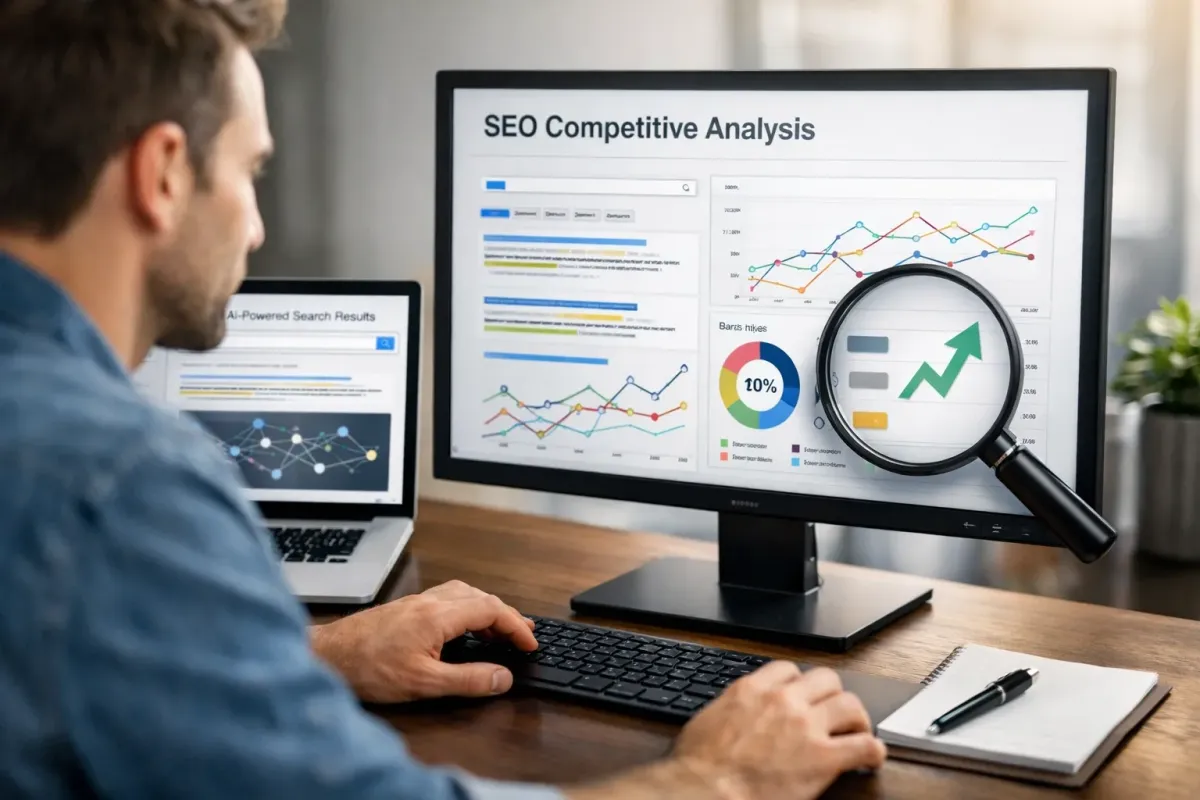
AI Search Matters and How to Future-Proof Your Clients' SEO Using Competitor Signals
The SEO landscape just went through a meat grinder. If you’ve been paying attention to the shift in search behavior lately, you know that the "10 blue links" era is officially in the rearview mirror. By early 2026, AI-generated summaries and LLM-driven answers have become the primary way users consume information.
For your agency, this is either a death knell or a massive opportunity. E-commerce sites are already seeing significant drops in traditional organic traffic because AI is answering questions before a user ever clicks a link. But here’s the secret: AI doesn't pull those answers out of thin air. It relies on signals.
To future-proof your clients, you have to stop looking at keywords in a vacuum and start looking at competitor signals. You need to understand the technical and authoritative patterns that lead AI to choose one brand over another. At GetHighLytics, we’ve built the engine to help you decode these signals in seconds, not hours.
Transform Your Strategy: Why AI Search Changes Everything
Traditional SEO was about tricking a crawler into thinking your page was the most relevant for a specific string of text. AI search is different. Large Language Models (LLMs) are looking for Entity Authority. They want to know if a brand is a trusted source, if the technical infrastructure is sound, and if the "pattern" of the website matches that of a market leader.
When an AI provides a summary, it’s looking for depth, clarity, and trust signals. If your client’s competitors are getting cited in those AI boxes and your client isn't, there’s a pattern you’re missing. Future-proofing isn't about guessing; it's about reverse-engineering the winners.
The Shift from Rankings to Citations
In the AI era, being "Number 1" is less important than being the "Primary Source." You want your client to be the footnote that the AI links to when it explains a complex topic. To get there, you must monitor:
Content Depth: Are competitors answering the "why" and "how," or just the "what"?
Technical Sophistication: Does the site "look" like an authority to a machine?
Pixel Density: What tracking and marketing tech are the leaders using?
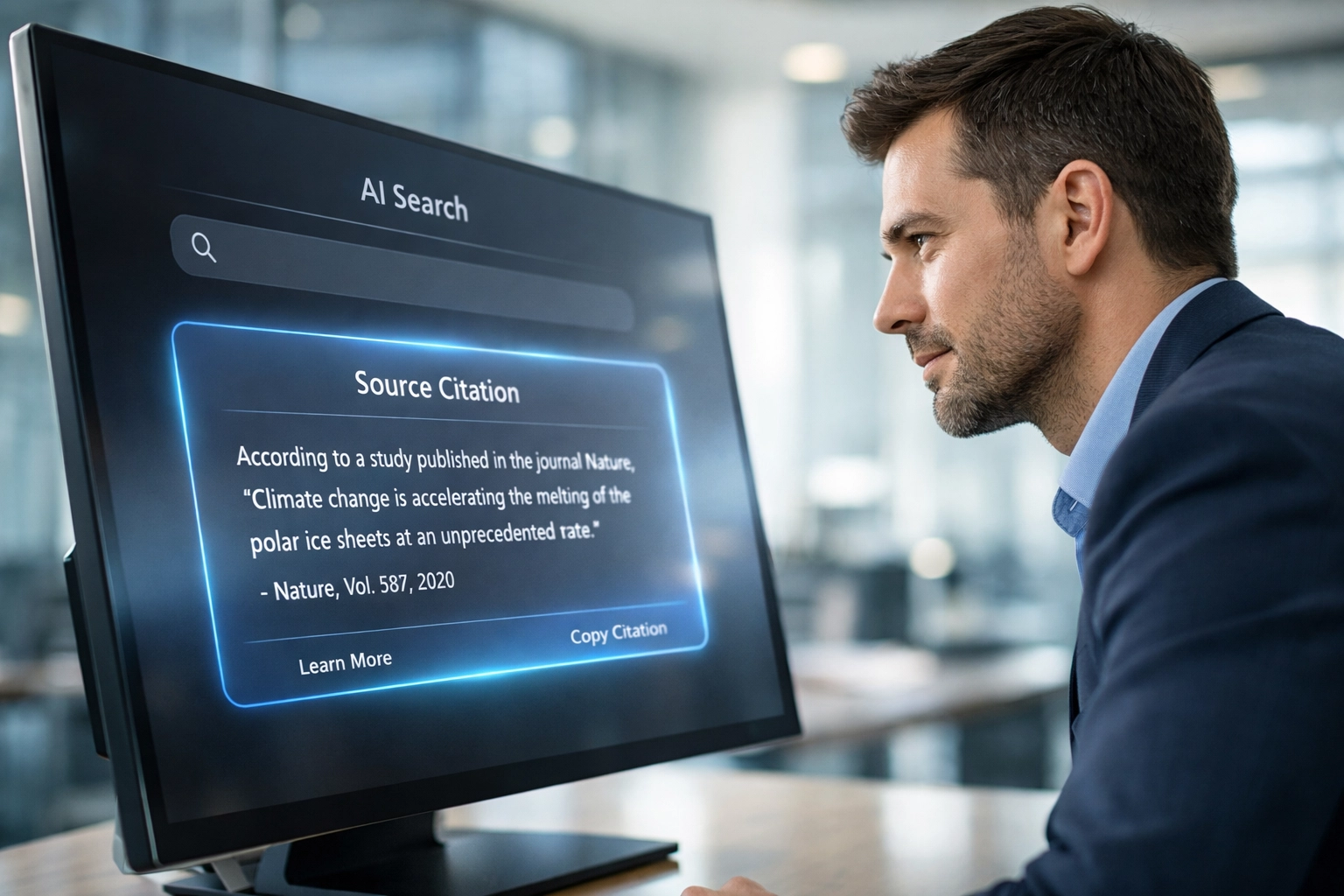
Unlock the Power of 178+ Pixel Patterns
One of the most overlooked aspects of competitive intelligence is the "tech stack signal." Most SEOs focus on headers and backlinks. But if you want to know which competitors the AI is likely to favor, look at their marketing sophistication.
At GetHighLytics, we track over 178+ specific pixel patterns. Why does this matter for SEO (and Paid Ads)? Because search engines and AI models prioritize brands that demonstrate a high level of "commercial intent" and user engagement.
If a competitor has a robust tracking setup: Meta Pixels, LinkedIn Insights, sophisticated GA4 configurations, and heatmaps: it tells the search engine that this is a professional entity invested in the user experience. These "pixels" are digital breadcrumbs. When you see a competitor with a high density of these patterns, you’re looking at a brand that is likely dominating the "Brand Authority" signals that AI models crave.
How to use these signals:
Identify the Gaps: If the top-cited brand in an AI search has 15 tracking pixels and your client has two, you’ve found a sophistication gap.
Prove Investment: Use these patterns to show your client exactly how much their competitors are "investing" in their digital presence.
Future-Proofing: Implementing these patterns doesn't just help with ads; it creates the "Data Rich" environment that modern search algorithms associate with authority.
Revolutionize Your Prospecting with GHL PDF Analysis
If you’re running a GoHighLevel (GHL) agency, you know that the hardest part of the job is the "Discovery" phase. Spending hours auditing a prospect's site just to get a "maybe" is a recipe for burnout.
You need to lead with benefits, and nothing is more beneficial than showing a prospect exactly where they are failing compared to their biggest rival. Our GHL Prospecting PDF analysis takes the complex data of competitor signals: SEO health, website performance, and those 178+ pixel patterns: and condenses it into a high-impact report.

You should be walking into every meeting with a document that says: "Your competitor is winning the AI search game because they have X, Y, and Z. Here is the roadmap to beat them."
By using the GetHighLytics platform, you can generate these insights in under two minutes. You aren't just selling "SEO services" anymore; you’re selling Competitive Intelligence. That is a high-margin, standalone service that positions you as a strategic partner rather than a task-taker.
Master Technical Signals: Site Performance as a Trust Factor
AI models are incredibly resource-heavy. When they crawl the web to build their knowledge bases, they prefer sites that are fast, structured, and easy to parse. This is where site performance becomes a major "competitor signal."
If your client's competitor has a 98/100 Core Web Vitals score and your client is sitting at a 45, the AI will naturally favor the faster site. It’s a matter of efficiency.
What to Look For:
Time to Interactive: If the competitor's site is "usable" faster, they win the user: and the AI's preference.
Schema Markup: Is the competitor using JSON-LD to "talk" to the AI in its own language?
Mobile-First Design: In 2026, if it doesn't work perfectly on a phone, it doesn't exist to an LLM.
Using GetHighLytics, you can instantly compare these technical signals. Don't just tell your client their site is slow: show them the side-by-side comparison of the brand that is currently stealing their AI search visibility.

Scale Your Agency by Selling "Patterns" Not "Tasks"
The biggest mistake agencies make is selling SEO as a list of to-dos: "We will write 4 blogs, build 10 links, and fix 5 errors." In the age of AI, that sounds like a commodity.
Instead, sell the Pattern Mastery.
Step 1: Use GetHighLytics to identify the top 3 competitors currently winning the "AI Summary" space for your client's niche.
Step 2: Analyze their 178+ pixel patterns and technical signals.
Step 3: Create a "Future-Proofing Roadmap" that mirrors and then exceeds those signals.
This approach shifts the conversation from "How much does this cost?" to "How fast can we bridge this gap?" You are no longer competing with $500/month offshore agencies. You are providing a specialized service that protects the client's most valuable asset: their visibility.
> "The winners in the AI search era won't be those with the most content, but those with the most authoritative signals." : Digital Strategy Insight, 2026.
Create Urgency: The AI Search Window is Closing
The transition to AI-first search is happening right now. Every day your client isn't optimized for these signals is a day they lose ground to a competitor who is.
You can start today by running a quick audit on your top three prospects. Don't wait for them to ask why their traffic is dipping. Be the expert who explains the shift before it becomes a crisis.
Your Action Plan:
Audit: Run your current clients through the GetHighLytics engine to see their current pixel and performance "Signal Score."
Compare: Benchmark them against their most aggressive competitor.
Present: Use the GHL Prospecting PDF to show the "Sophistication Gap."
Close: Offer a "Future-Proofing Sprint" to implement the necessary signals (Technical SEO, Schema, and Pixel Tracking).

Final Thoughts: The Future is Signal-Driven
SEO isn't dead; it's just graduated. It’s no longer about keywords; it’s about intent, authority, and technical patterns. By focusing on competitor signals, you stop guessing what the search engines want and start following the data that is already working.
Stop doing manual research that takes hours. Start using a platform designed for the modern GHL agency. Discover the gaps, enable your team with better data, and boost your client's visibility in the AI era.
Ready to see the signals for yourself? Get instant access to GetHighLytics here and transform your agency’s SEO strategy in under two minutes.